Joint Ownership and What It Actually Does
Joint ownership is presented as a convenience and operates as a disposition. Property held with a right of survivorship passes automatically to the survivor on death, outside the will, regardless of what any other document says about who should have it.
The rule in short
Property held jointly with a right of survivorship passes to the surviving owner automatically on death, outside the estate and outside the will. Tenancy in common does not work that way. The distinction is frequently unknown to the people who chose it, and the consequences reach beyond succession into creditor exposure, tax treatment and the ability to deal with the property during life.
The form of ownership on a deed was chosen at a closing twenty years ago, by somebody who ticked a box, and it will decide who gets the house regardless of anything written since.
The forms of ownership
Joint with survivorship. Where the survivor takes the whole automatically, outside the estate, immediately on the other owner's death.
Tenancy in common. Where each owner holds a distinct share that passes under their own will or intestacy in the ordinary way.
A form between spouses. Recognized in some jurisdictions, carrying survivorship and additional protections against individual creditors.
Recorded on the document. Deed, title or account registration, which is where the answer is and which almost nobody looks at.
And frequently chosen unintentionally. At a closing or an account opening, by somebody selecting a default without any of this being explained.
What survivorship actually does
Passes the asset immediately. On death, without probate and without any involvement by an executor or a court.
Outside the will entirely. So a will disposing of the property achieves nothing, on the principle in the form that overrides the will.
Regardless of the other owner's share. Since survivorship transfers the whole rather than dividing anything according to contribution.
And regardless of what was intended. Since the form of ownership is the disposition and evidence about intentions does not generally displace it.
Which is convenient or catastrophic. Depending entirely on whether the outcome matches what the owner actually wanted.
| Form of ownership | On death | Controlled by the will |
|---|---|---|
| Joint with survivorship | Passes to the survivor | No |
| Tenancy in common | Share passes under the will | Yes |
| Spousal form with survivorship | Passes to the survivor | No |
| Sole ownership | Passes under the will | Yes |
| Transfer-on-death registration | Passes to the named person | No |
The consequences during life
Creditor exposure. Since a co-owner's creditors may be able to reach the asset, which matters where somebody has financial difficulties.
Loss of unilateral control. As dealings with the property generally require every owner to agree, including a sale or a mortgage.
Exposure to a co-owner's affairs. Divorce, bankruptcy and litigation involving them can all affect an asset the original owner regarded as theirs.
Care funding consequences. Since adding a co-owner may be treated as a transfer, per gifts that create a penalty.
And tax consequences. On an eventual sale, which frequently differ from the treatment of inherited property and are rarely considered.
Families spend hours discussing who should have the house and never look at the document that decides it. The form of ownership is recorded on the deed, it is a short piece of text, and it determines whether the property passes under the will or automatically to a co-owner. Obtaining a copy is straightforward in most jurisdictions and it converts an assumption into a fact.
Why people do it anyway
To avoid probate. Which it achieves, and which is one legitimate reason among several to consider it deliberately.
For convenience. So that a child can help with bills and accounts, which is examined in adding a child to an account.
On informal advice. From a friend or a relative who did it, which is how the great majority of these arrangements come about.
Without understanding survivorship. Believing the arrangement is administrative rather than a disposition of the asset.
And without considering the alternatives. Including transfer-on-death registrations, which achieve the succession result without the lifetime consequences.
What to check, and what to consider instead
Read the deed and the registrations. For every property and account, since the form of ownership is recorded and is frequently not what people assume.
Establish what each will do on death. Individually, and compare the total against what the will and the beneficiary forms are meant to achieve.
Consider transfer-on-death instead. Which passes the asset without giving anybody rights during life, per transfer on death registrations.
Consider a power of attorney instead. Where the objective is help with administration rather than succession, which is what it is actually for.
And take advice before changing anything. Since altering ownership has tax, creditor and care funding consequences that are easy to trigger accidentally.
Joint ownership is chosen for convenience and operates as a disposition, which is the mismatch at the heart of nearly every problem it causes.
The distinction between survivorship and tenancy in common decides who gets the asset, and it was frequently selected at a closing by somebody ticking a default.
A will does not reach property that passes by survivorship, because the asset never enters the estate, and a clause attempting to deal with it achieves nothing.
The lifetime consequences are as significant as the succession ones: creditor exposure, loss of control, and exposure to a co-owner's divorce or bankruptcy.
Care funding is a further consideration, since adding a co-owner may be treated as a transfer and create a penalty at exactly the wrong moment.
Where the objective is avoiding probate, transfer-on-death registrations frequently achieve the same result without giving anybody rights during the owner's lifetime.
Where the objective is help with administration, a power of attorney is the instrument designed for it and does not dispose of anything.
Reading the deed is the step that converts all of this from assumption into fact, and it takes one request and a few minutes.
Changing ownership should not be done without advice, because the tax, creditor and funding consequences are easy to trigger by accident.
And the whole picture — deeds, registrations, designations and the will together — is what actually determines an outcome, which is why looking at any one of them alone is misleading.
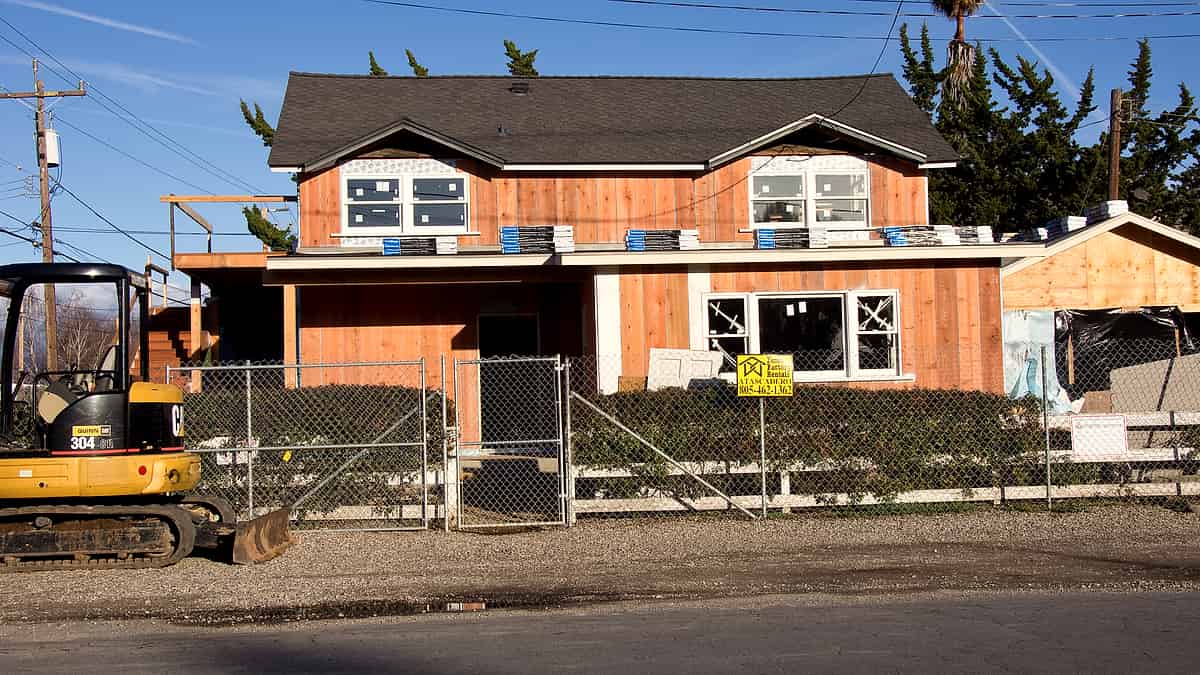
There is a particular version of this that recurs often enough to deserve naming. A widowed parent adds an adult child to the deed of the family home, believing it will simplify things later and make the child's help with the house easier.
What has actually happened is that the child now owns the house on the parent's death, regardless of what the will says about dividing everything equally between three children. The parent cannot sell without the child's agreement. The house is exposed to the child's divorce and creditors. And the eventual tax treatment on a sale is worse than it would have been on inheritance.
Every one of those consequences is invisible on the day the deed is signed, and none of them was intended by anybody. The arrangement was suggested by a friend, seemed sensible, and cost nothing at the time.
That sequence is the single most common way a family ends up in a dispute about a house, and it is entirely preventable by a single conversation with somebody who would have explained what survivorship does.
Points to carry away
- Survivorship ownership passes automatically outside the will.
- Tenancy in common does not carry survivorship.
- The form of ownership is recorded on the deed or account.
- Joint ownership exposes the asset to a co-owner's creditors.
- It affects dealings during life as well as succession.
Questions readers ask
What is the difference between the forms of ownership?
Joint ownership with a right of survivorship means the surviving owner takes the whole automatically on the other's death. Tenancy in common means each owner has a distinct share which passes under their will or intestacy. Some jurisdictions recognize a further form between spouses with additional protections. The form is recorded on the deed or the account registration, and it is frequently chosen at a closing by somebody ticking a box without anybody explaining that the two produce entirely different outcomes.
Does a will change it?
No. Property passing by survivorship never enters the estate, so a will has nothing to dispose of. A clause purporting to leave a jointly owned house to somebody other than the co-owner generally achieves nothing at all. This is the same principle that governs beneficiary designations, and it produces the same category of surprise for families who assumed the will was the document that mattered. Changing the outcome requires changing the ownership, not the will.
What are the other consequences?
A joint owner's creditors may be able to reach the asset, which is a real exposure where a co-owner has financial difficulties. Dealing with the property during life generally requires all owners to agree, so a parent who added a child cannot sell without them. There are frequently tax consequences on the eventual sale that differ from those on inherited property. And in some circumstances adding a co-owner is treated as a transfer for care funding purposes, which carries its own penalty.
Sources
- Legal Information Institute — Joint Tenancylaw.cornell.edu
- Legal Information Institute — Tenancy in Commonlaw.cornell.edu
- Legal Information Institute — Right of Survivorshiplaw.cornell.edu
- Legal Information Institute — Tenancy by the Entiretylaw.cornell.edu
- Legal Information Institute — Probatelaw.cornell.edu
- Legal Information Institute — Propertylaw.cornell.edu
Silverline Legal Notes is a publication, not a law firm. This article states general rules and cites its sources; it is not advice about any particular case, and the law differs by state and changes over time.
More in Passing Things On

Checking and Changing a Designation
A designation review involves listing every account and policy including those with former employers, requesting written confirmation of the current designation from each provider, comparing it against present intentions, submitting changes through the provider's own process, and retaining written confirmation that each change was recorded. Confirmation matters, because a submitted form that was never processed leaves the old designation in place.
Transfer-on-Death Registrations
A payable-on-death or transfer-on-death registration names somebody to receive an account, security or in many states a vehicle or a property, on the owner's death. The named person has no rights while the owner is alive, cannot access the asset, and does not expose it to their own creditors. The registration passes the asset outside probate and outside the will, is revocable at any time, and is available in most states for a wide range of assets.

When the Plan and the Paperwork Disagree
An estate is distributed by whatever combination of documents governs each asset: designations for retirement accounts and policies, the form of ownership for property, registrations where they exist, and the will for everything else. Where these have been made at different times without reference to each other, the total result frequently bears no relation to what was intended, and no document corrects the others.